Online Only 24/7/365 Based in Krabi Thailand.
Krabi
24/7
Monday-Sunday
12:00 am - 12:am
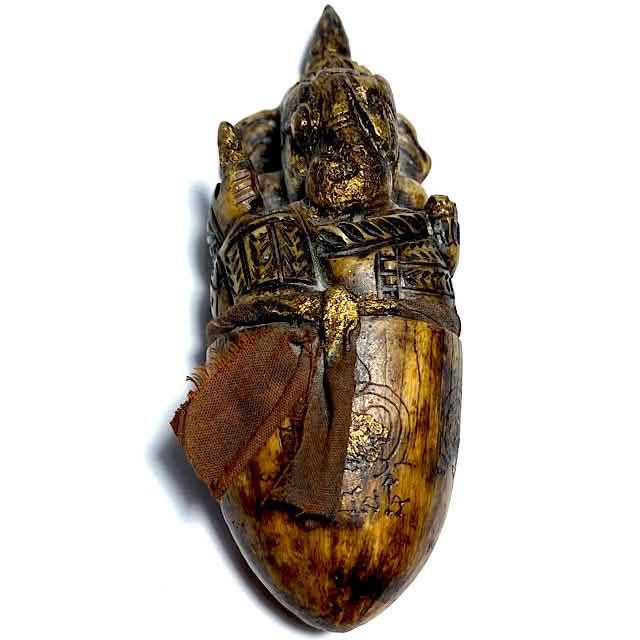
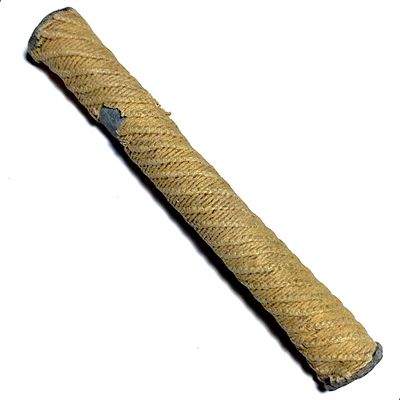
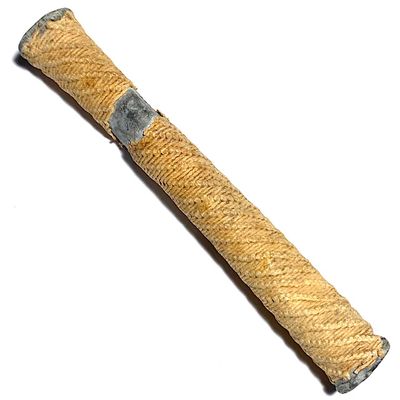
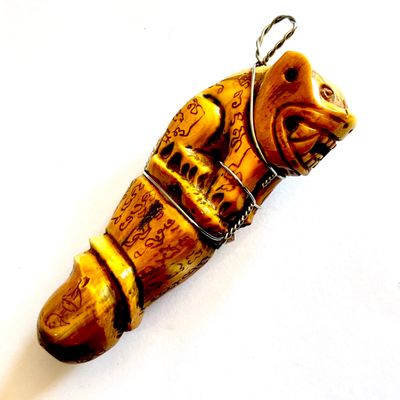
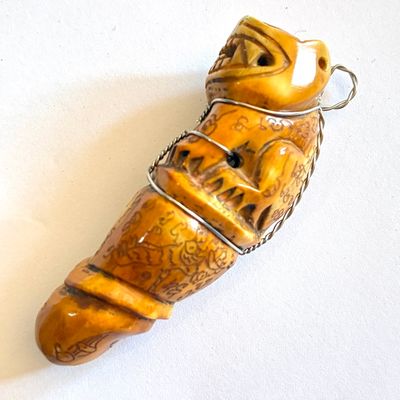
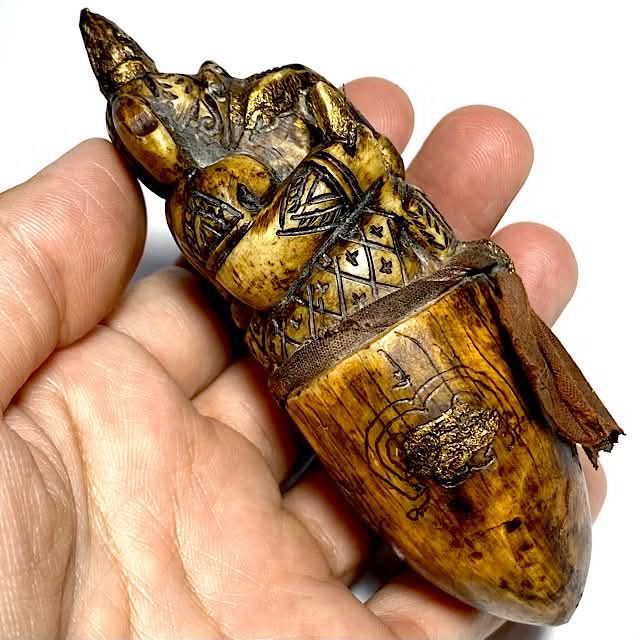
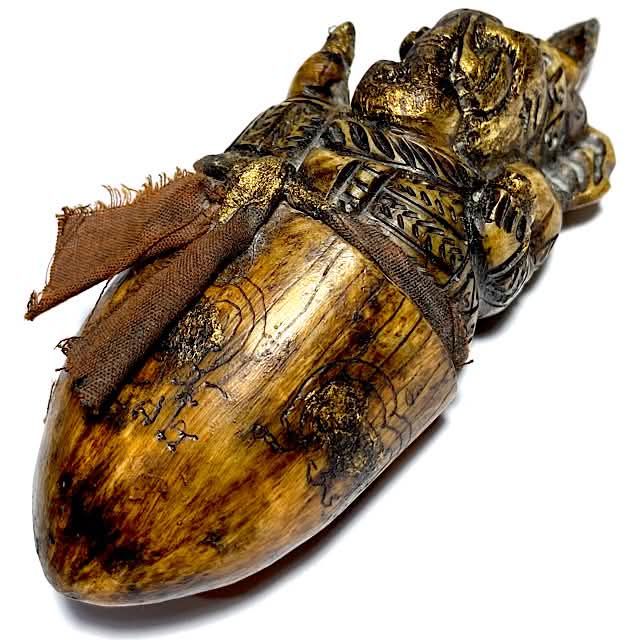
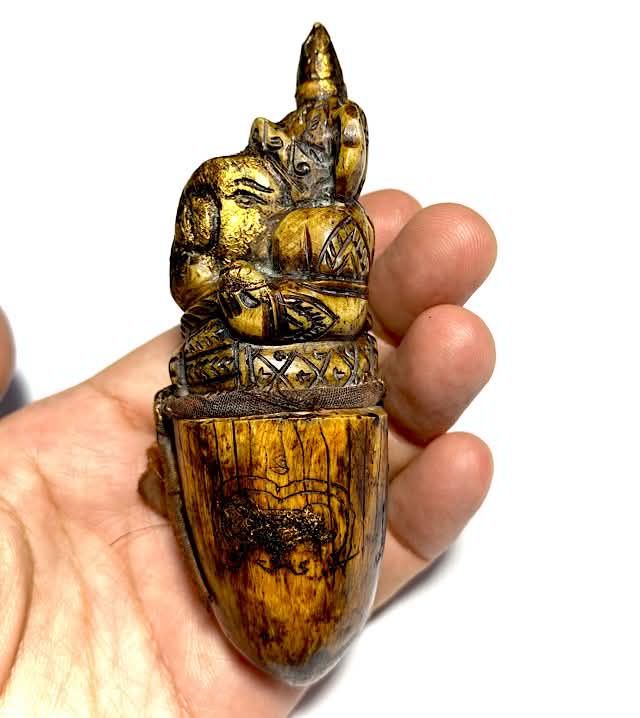
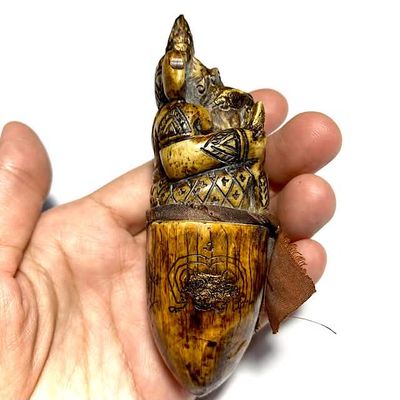
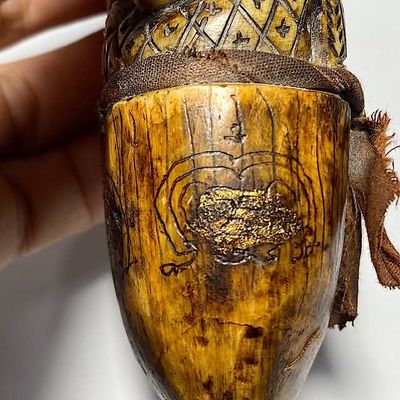
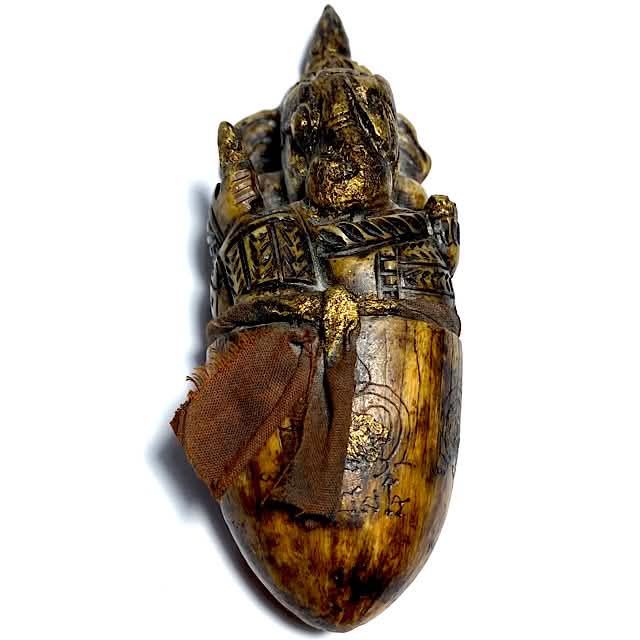
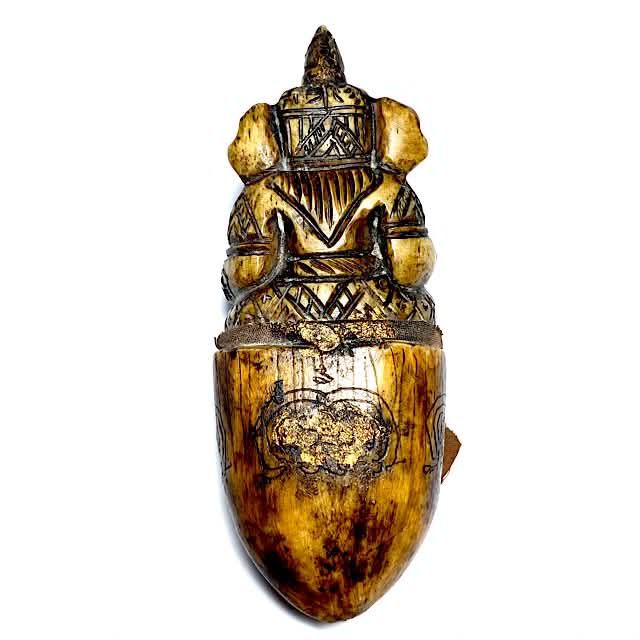
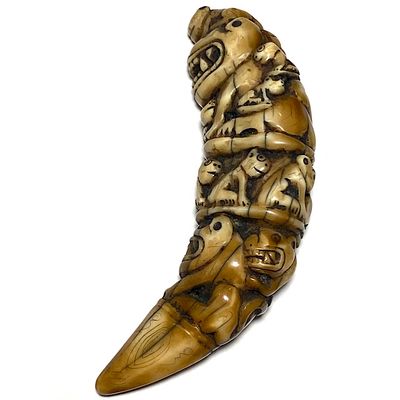
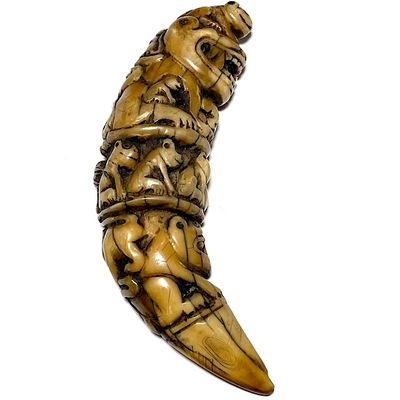
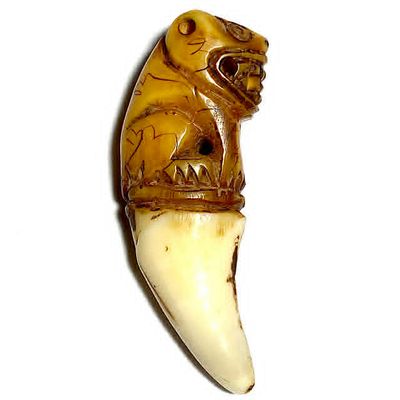
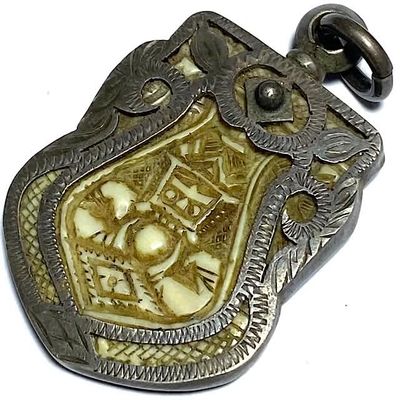
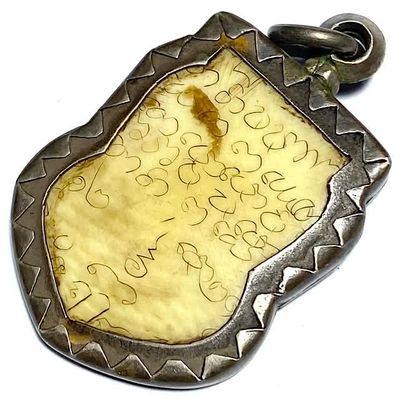
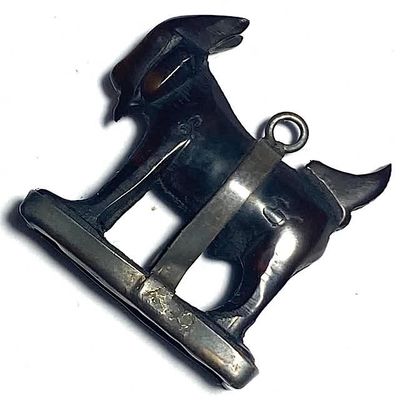
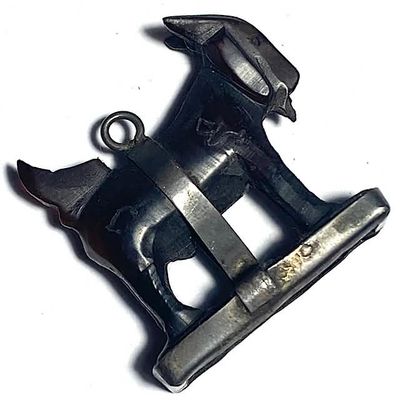
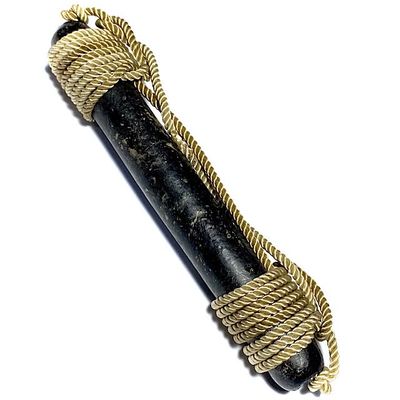
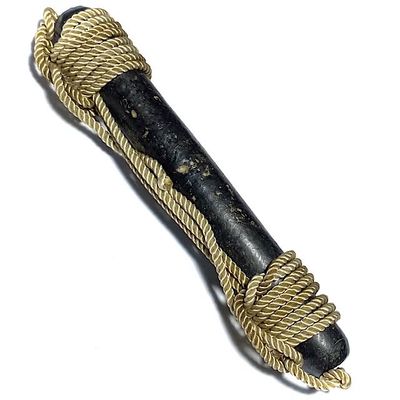
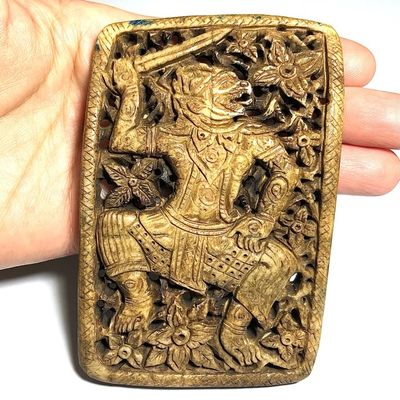
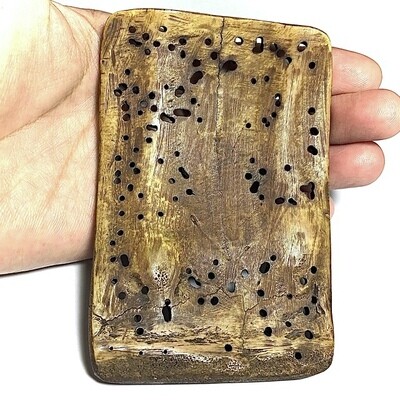
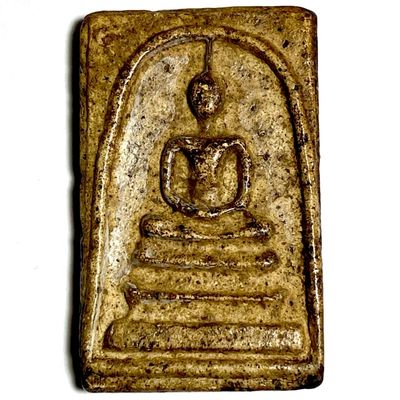
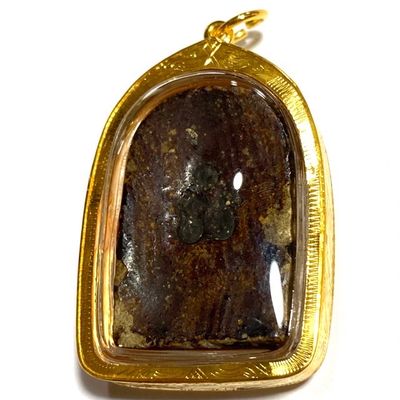
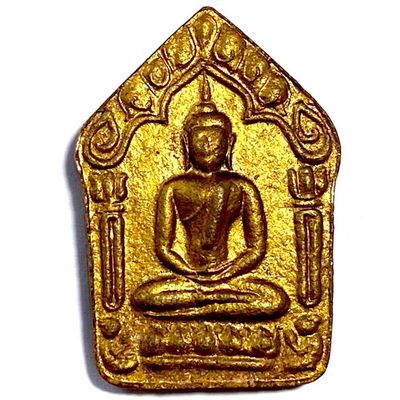
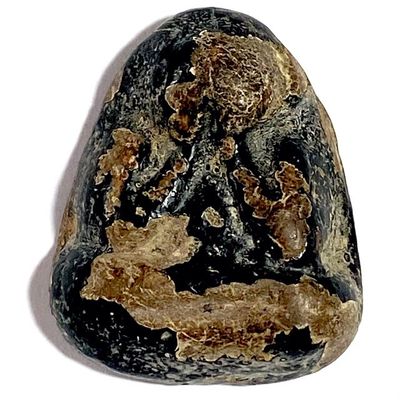
An amazing and immensely beautiful and pristine exhibit of that Can only be called an extreme rarity and Collector's item for curation not only for Bucha; The Nga Chang Gae Pra Pikanes Carved Tusk with Hand Inscriptions and Ganesha God - blessed by the great Luang Por Derm.
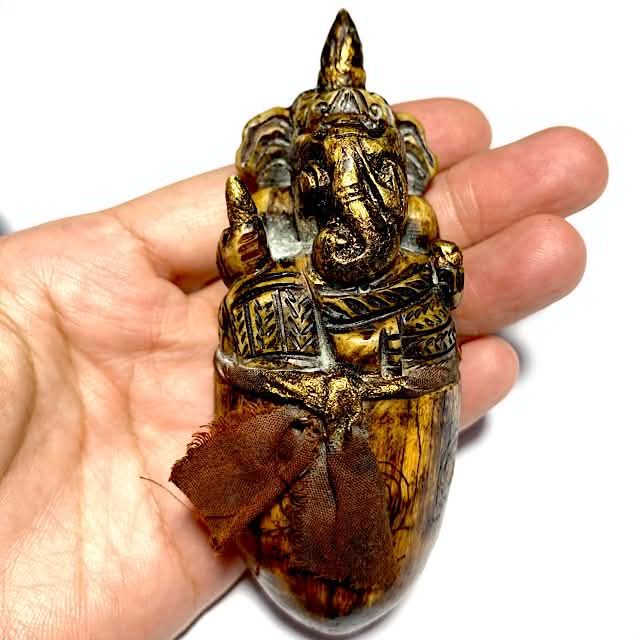
It is an immensely rare occasion to see one of these very rare, and limited items, which were distributed to only a very few famous master monks of the time and era for blessing empowerment and inscription, this one being derived from the great LP Derm, of Wat Nong Po in Pichit. We proudly present a master-class 'Krueang Rang' talismanic type Deity Amulet made from carved tusk with bone Gamesha bound to the Ganesha-tusk, which has a patina that coincides with the age of the era of Luang Por Derm.
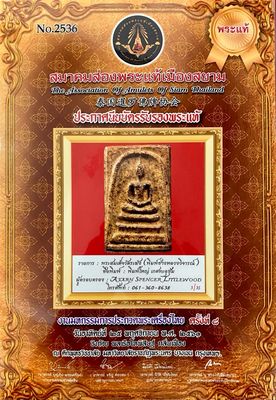
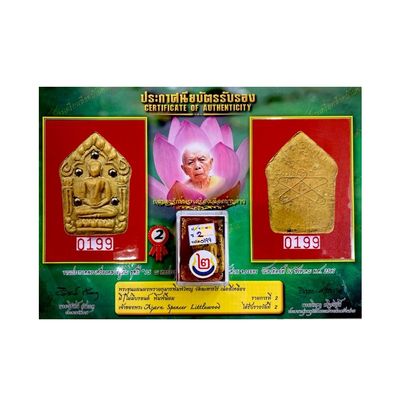
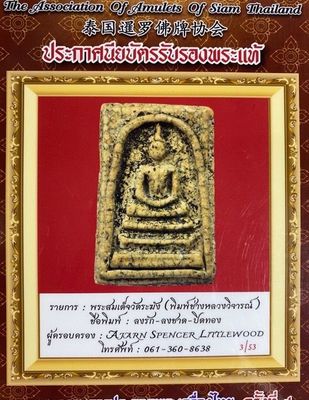
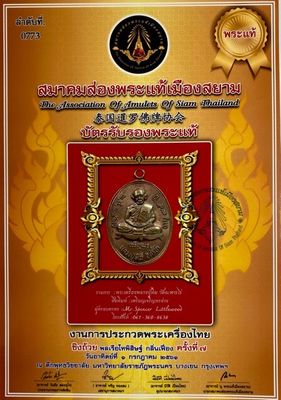
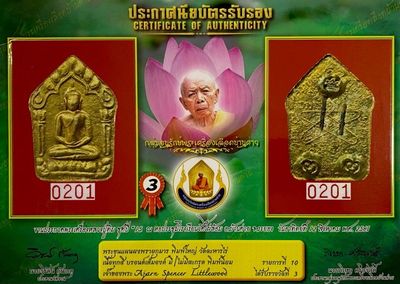
Below; Certificate of Authenticity from the Association of Amulets of Siam Thailand
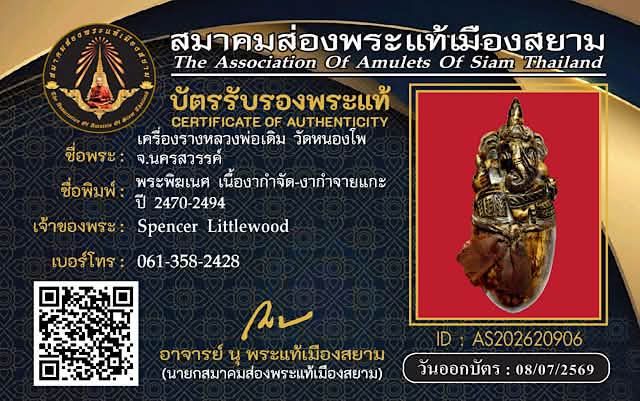
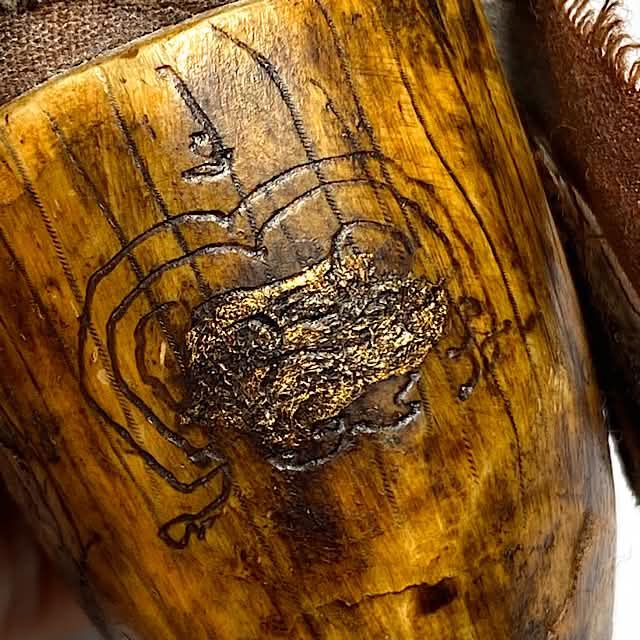
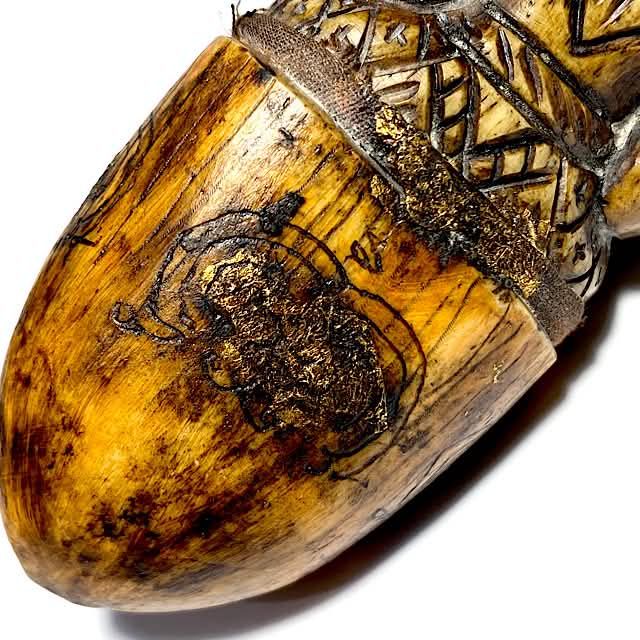
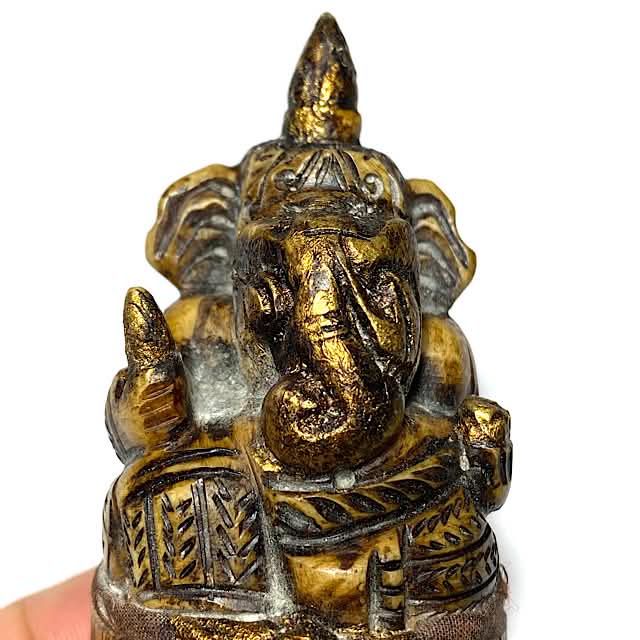
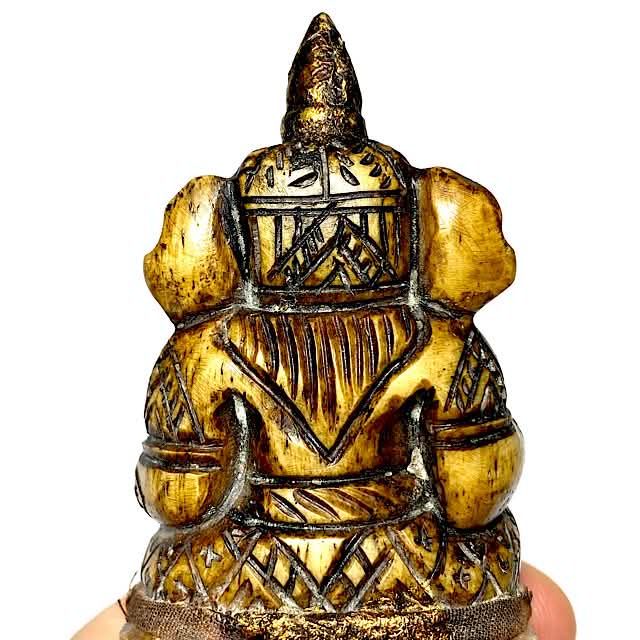
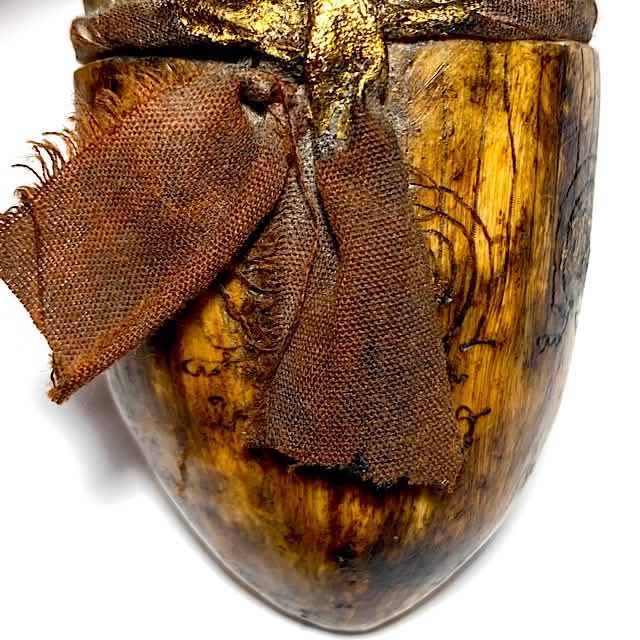
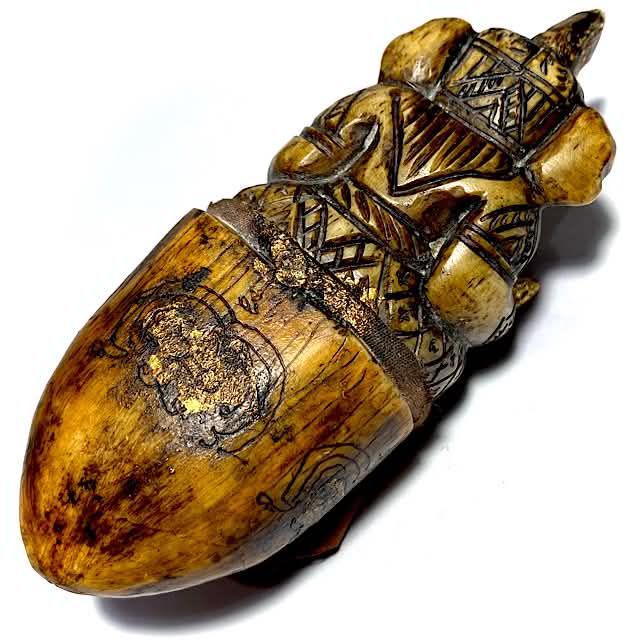
This Master-Class Item is certificated by the Amulet Society of Siam Thailand. Its fine Artisanry, and rarity as a Talismanic object makes this exhibit something that will soon be seen only in public museums and in the private collections of wealthy curators. This Bucha Size Plai Nga Chang Gae Pikanesworn Ivory Tusk Tip, with exquisitely hand carved Ganesha Elephant Headed God, and hand inscriptions of Sacred Yant Putsoorn 5 Dhyani Buddha Yantra on both sides of the tusk, with the 'Chaya' (Monk's name) of 'Puttasaro' inscribed below the front face Yant, which is the Chaya of Luang Por Derm Puttasaro of Wat Nong Po temple, in Pijit.The exhibit measures roughly 4.5 Inches in length/height.
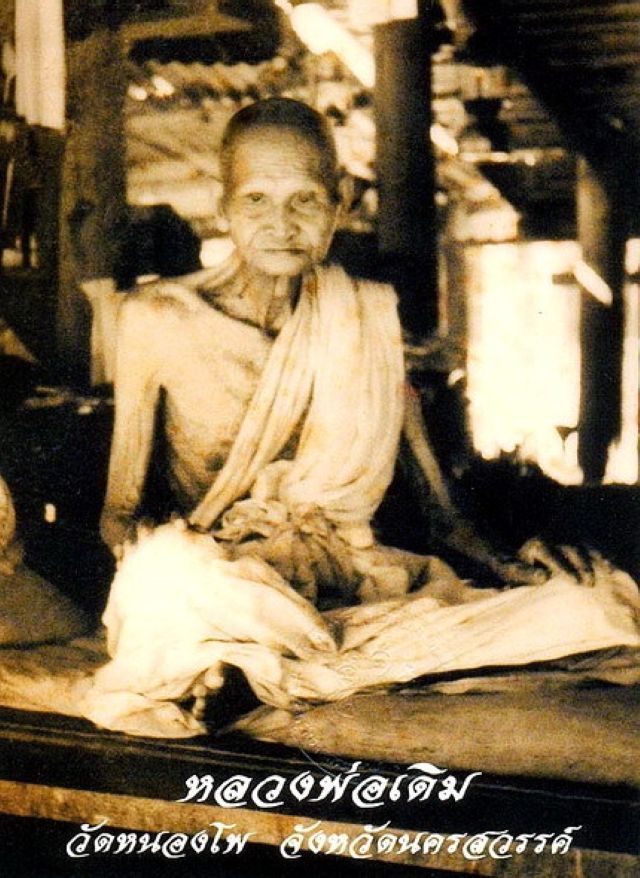
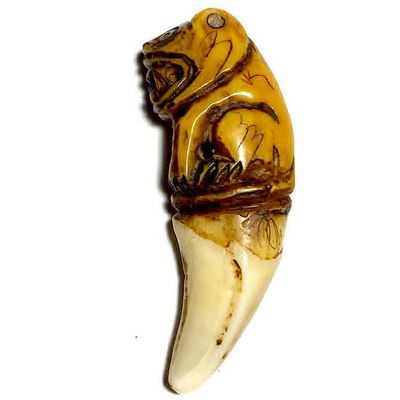
We at Ancient Amulet, have only once ever before encountered such an item once in our 30 years of collection, which we distributed some years ago. It was one of the exhibits which was inscribed and blessed by a different master, namely the great Luang Phu Tim, of Wat Laharn Rai, in Rayong. These items were seen to have been blessed by various masters around the country in that era, which shows that the find was distributed to a number of different masters who all inscribed them with their own special inimitable spell craft.
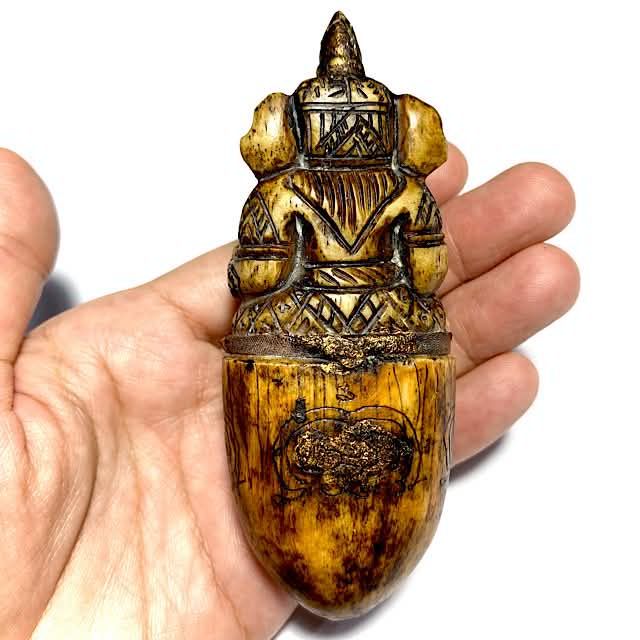
These tusks will have been like many items like this that sometimes turn up in the hands of the faithful often get taken to different masters around the country in very small numbers by the devotees of each Master.
This is why we sometimes amulet or talismanic objects from the same sources but blessed by different masters. this is common in the case where rare substances or objects are acquired and get distributed between different temples, and was a common practice in all fairness when encountering such rare substances with inherent magical powers.
The tusk is of course the perfect magical Muan Sarn substance for The great God Ganesha who is in himself possessed with the head of an elephant which comes from a story of the Puranas; The Origin Narrative
(Note; While popular modern discourse often attributes Hindu mythological narratives broadly to the "Vedas," the specific legend of Shiva severing Ganesha's head originates within the Puranas, as the Rigveda references "Ganapati" primarily as an epithet for deities like Brihaspati or Indra rather than the elephant-headed son of Parvati.)
An amazing and immensely beautiful and pristine exhibit of that Can only be called an extreme rarity and Collector's item for curation not only for Bucha; The Nga Chang Gae Pra Pikanes Carved Tusk with Hand Inscriptions and Ganesha God - blessed by the great Luang Por Derm.
It is an immensely rare occasion to see one of these very rare, and limited items, which were distributed to only a very few famous master monks of the time and era for blessing empowerment and inscription, this one being derived from the great LP Derm, of Wat Nong Po in Pichit. We proudly present a master-class 'Krueang Rang' talismanic type Deity Amulet made from carved tusk with bone Gamesha bound to the Ganesha-tusk, which has a patina that coincides with the age of the era of Luang Por Derm.
Below; Certificate of Authenticity from the Association of Amulets of Siam Thailand
This Master-Class Item is certificated by the Amulet Society of Siam Thailand. Its fine Artisanry, and rarity as a Talismanic object makes this exhibit something that will soon be seen only in public museums and in the private collections of wealthy curators. This Bucha Size Plai Nga Chang Gae Pikanesworn Ivory Tusk Tip, with exquisitely hand carved Ganesha Elephant Headed God, and hand inscriptions of Sacred Yant Putsoorn 5 Dhyani Buddha Yantra on both sides of the tusk, with the 'Chaya' (Monk's name) of 'Puttasaro' inscribed below the front face Yant, which is the Chaya of Luang Por Derm Puttasaro of Wat Nong Po temple, in Pijit.The exhibit measures roughly 4.5 Inches in length/height.
We at Ancient Amulet, have only once ever before encountered such an item once in our 30 years of collection, which we distributed some years ago. It was one of the exhibits which was inscribed and blessed by a different master, namely the great Luang Phu Tim, of Wat Laharn Rai, in Rayong. These items were seen to have been blessed by various masters around the country in that era, which shows that the find was distributed to a number of different masters who all inscribed them with their own special inimitable spell craft.
These tusks will have been like many items like this that sometimes turn up in the hands of the faithful often get taken to different masters around the country in very small numbers by the devotees of each Master.
This is why we sometimes amulet or talismanic objects from the same sources but blessed by different masters. this is common in the case where rare substances or objects are acquired and get distributed between different temples, and was a common practice in all fairness when encountering such rare substances with inherent magical powers.
The tusk is of course the perfect magical Muan Sarn substance for The great God Ganesha who is in himself possessed with the head of an elephant which comes from a story of the Puranas; The Origin Narrative
(Note; While popular modern discourse often attributes Hindu mythological narratives broadly to the "Vedas," the specific legend of Shiva severing Ganesha's head originates within the Puranas, as the Rigveda references "Ganapati" primarily as an epithet for deities like Brihaspati or Indra rather than the elephant-headed son of Parvati.)
Magical Effects of Pra Pikanes Amulets (Wicha Saiyasart)
Benefits of Paying Bucha / Poojah to Pra Pikanes
.”
In Thai mythological traditions, ritual grimoires, and Wai Kru lineage lore for artisans and performing arts, the story of how Pra Pikanes (Ganesha) broke his tusk diverges notably from the classical Indian Purāṇic account of Parashurama's axe, attributing the deed instead to Pra Ruesi Petchalugan (Vishnukarman / the Master Artisan Rishi).
The Legend of the Broken Tusk by the Axe of Pra Ruesi Petchalugan
Beyond providing an indigenous cultural rationale for the deity's title Ekadanta ("Single-Tusked"), this narrative serves as a central allegory within Thai artisanal and esoteric lineages (Saiyasart), symbolizing selfless duty, strict adherence to one's vows, and deep reverence toward ancestral masters and teachers.
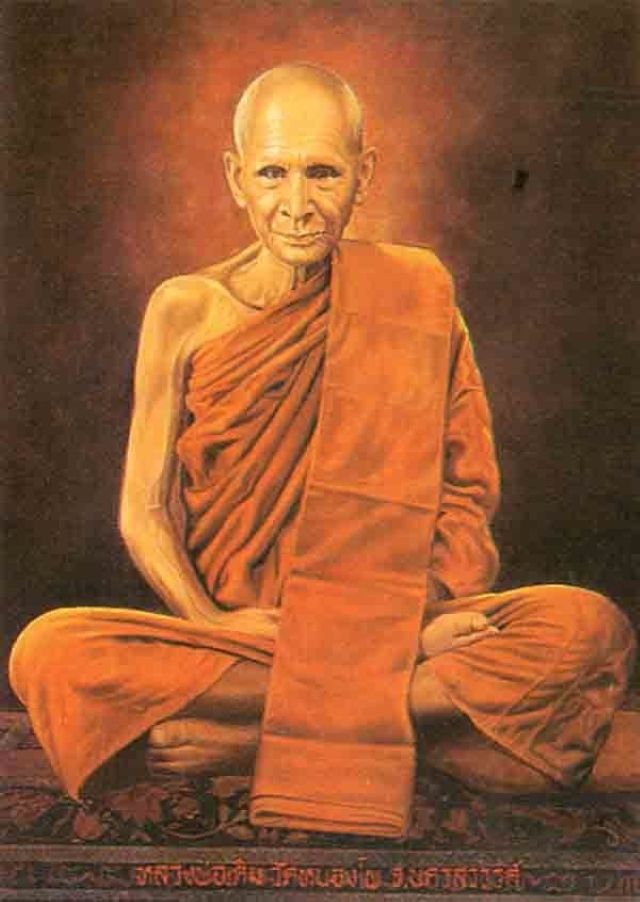
|
Item |
Details (Thai source) |
|
Birth name |
“Phu Manee” (father Niam, mother Poo) |
|
Date of birth |
6 Feb 2403 (Buddhist‑calendar Wak‑a, Friday, Wan 11 Kham 3) |
|
Ordination |
Entered Wat Khao Kaeo (Pattasima) at age 20; full upasampada on 31 Oct 2423 under senior monks Luang Por Kaeo, Luang Por Ngern, Luang Por Thet |
|
Secular study |
Learned “Wit‑thaya‑khom” (traditional physics/medicine) from Nai Phan Chuphan – a village scholar |
|
Abbot of Wat Nong Pho |
2435 – 2494 (91 years old, Pra sri 71 years) |
|
Death |
22 May 2494, age 92 years (71 years of Pra sri) |
|
Honorific title |
“เทพเจ้าแห่งเมืองสี่แคว” (the “Deity of the Four Quadrants”) – a title used by the amulet community |
The temple today hosts an Institute of Sacred Objects (ISM) and a “Akara‑Kem” school where the craftspeople who work on the Knife‑Doctor (Mued Mhao) and other amulets are trained (artisans “Jim, Khi, Son”).
Luang Por Derm taught that every amulet must be charged with the nine‑fold mantra (often described as “the power‑spell of the Muan Pong‑Ittihe” in the community). The chant is inscribed on the tiny “tad‑krud” plates (gold, silver, or lead) that are later sealed into the object.
When the object is completed it is blessed three‑to‑four nights (usually 3 nights) while the nine‑fold chant is repeated, thereby embedding the protective “katha” into the metal, the cloth or the bone.
|
Process |
What the source says |
|
Khmer‑reverse script (อักษรขอมกลับด้าน) |
Engraved with a sharp iron stylus so the lines are ≥ 0.15 mm deep; visible even after decades under UV light |
|
Yantra under the base |
A deep‑etched protective yantra is mandatory; if the engraving is shallow the master will remove and re‑etch it |
|
Lost‑wax (ขี้ผึ้งหาย) casting |
Traditional hand‑made moulds (no CNC); the same artisans who work on the Mued Mhao handle the wax model, the mould and the pouring |
|
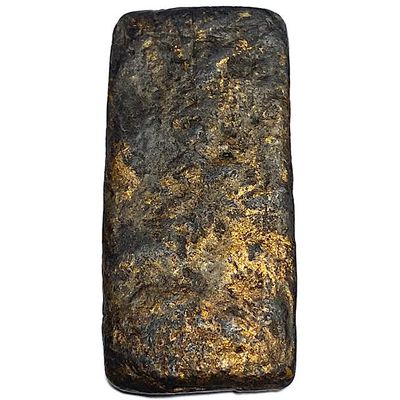
Metal alloy for the Knife‑Doctor (Mitmor) |
Fe ≈ 70 %, Pb ≈ 28 %, Sn ≈ 2 % – a blend of “tapu sang‑khwan‑r” (old‑style nails), “tapu so‑ng‑phi” (charred nails), broken alms‑bowls and “nok nam‑phi” (river‑water iron) |
|
Handle construction |
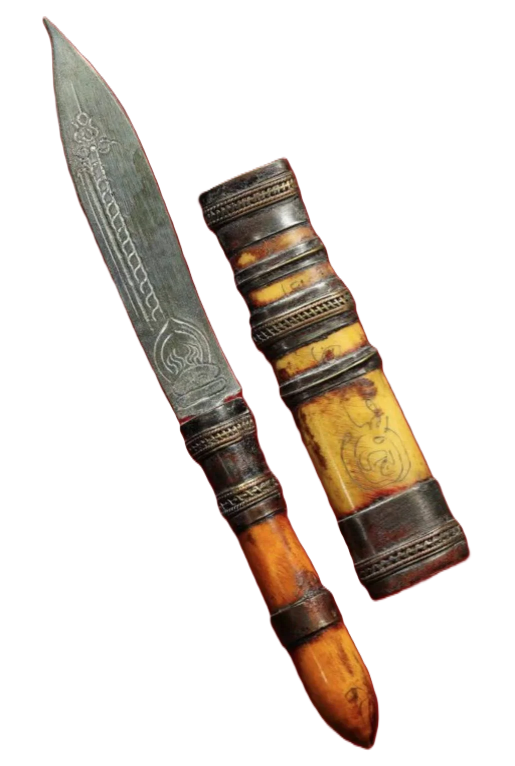
Large Mued Mhao → haft of ivory/elephant horn + hilt of wood & ivory; small, pocket‑size version → both haft and hilt of horn |
|
Inserting the “tad‑krud” plates |
Tiny gold, silver or lead plates bearing Khmer script and the nine‑fold chant are set into the handle, then clamped with a “krang” (copper/iron reinforcement) |
|
Final “blessing” |
On the 15th waning‑moon (day 15) the Muan Pong‑Ittihe powder is mixed with Luang Por Derm’s semen and poured onto the plates before the final chant is performed |
|
Type |
Typical name / model |
Material / technique |
Approx. casting year* |
Distinctive feature (what collectors look for) |
|
Sheep‑horn amulet (งาแกะ) |
“Singha / Nang Kwak” – two styles (closed‑eye of the Buddha & open‑eye of an Arahant) |
Actual ram’s horn, white tusk, Singh‑Rach carving |
1960‑70 (no exact year) |
If the Khmer‑reverse characters “นะ มะ พะ ทะ” appear on the base, the piece is almost certainly hand‑etched by Luang Por Derm |
|
Powder amulet (พระผง) |
“Pra Pong Jit Drop” – model 9 (mass‑solid) |
Fine powder (starch‑water‑binding) – mantra “9 times” embedded |
2540 CE (model 9) |
The “drop‑of‑water” design is a visual cue of the nine‑fold chant. |
|
Clay‑tablet (พระพิมพ์ดิน) |
Various – no single model recorded |
Clay mixed with natural pigments, dry‑finished then incised with Khmer script using a bone‑point stylus |
– |
The tablet surface shows a faint “Khmer‑stroke” that can be examined under magnification. |
|
Lead Buddha (พระตะกั่ว) |
“Closed‑eye – double‑face” (two sides) |
Lead (≈ 90 % Pb) alloyed with tin and iron; deep‑etched khmer yantra under the base |
2493 CE |
Weight ≈ 10 g; a deep‑etched “nah mud tha kan na” yantra on the inner side. |
|
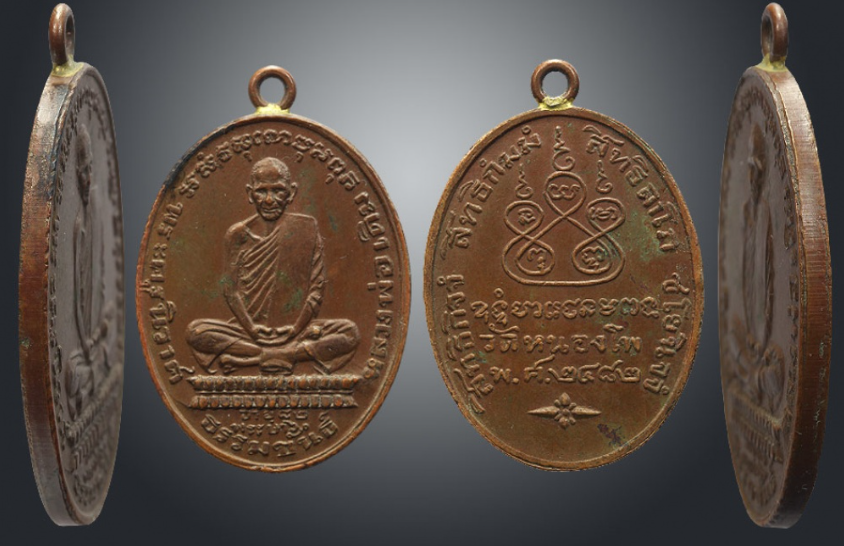
Coins (เหรียญ) |
“Pra Kray‑Nok”, “Pra Prak‑Dua” – gold, silver, lead versions |
Various metal coins; often tad‑krud plates are embedded in the reverse side |
2482‑2536 CE |
|
|
Cloth yantra (ผ้ายันต์) |
“Hand‑drawn Chinese ink” – foot‑print yantra, or “tat‑foot” (รอยเท้า) |
Cotton/mulberry silk, hand‑embroidered, ink‑stamped with Chinese characters (often a footprint) |
|
|
|
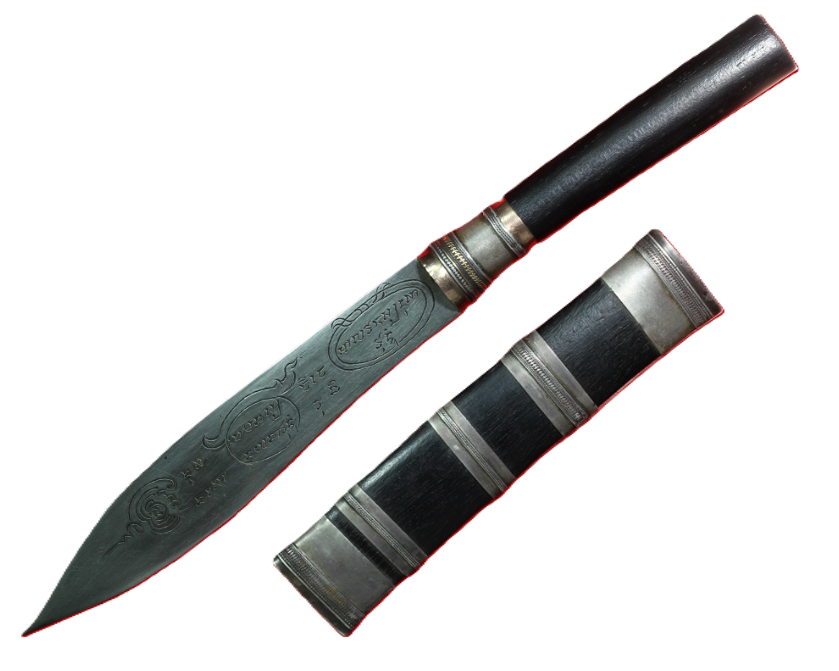
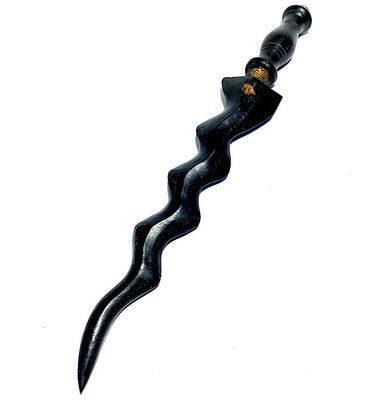
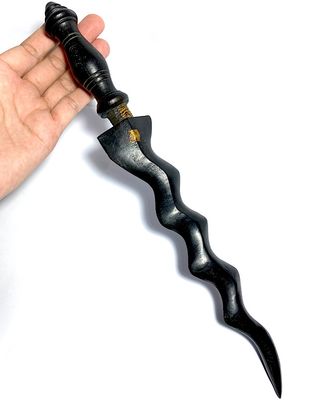
Knife‑Doctor (มีดหมอ) |
Large “Elephant‑rider knife”, later “pocket‑knife” |
Alloy as above; handle/haft of horn; tad‑krud plates (gold, silver, lead) with Khmer script and a 9‑times chant |
|
|
|
Floating (หล่อลอย) statue |
“Floating Buddha” – shrine‑size, uses lost‑wax with a buoyancy‑coating |
Cast in 2482 CE (same year as the bronze statue) |
|
|
|
Horn‑tip (ปลายงา) |
“Brahma‑killing horn” – the tip of a ram’s horn attached to a Buddha figure |
Same material as the horn amulet, but the tip is meant to “cut karmic knots” |
|
|
|
Ganesha coin (พระพิฆเนศ) |
“Ganesha‑after‑Maa” – front‑side of the mother‑goddess, metal ring |
No record that Luang Por Derm made these, but they appear in the same “mixed‑religion” market |
|
|
|
Five‑Buddha‑god yantra (ยันต์ 5 พระเจ้า) |
Inscribed on metal or cloth, the mantra “นะ โม พุท ธะ ยะ” |
No exact year, used for “total protection” (fire, insects, evil spirits) |
|
|
|
Benjapakee‑set (พระเบญจภาคี) |
“Floating five‑Buddha group” – a special 9‑times‑chant edition of the famous “Benjapakee” set |
Cast by a separate workshop (not directly by Luang Por Derm) but employing the same floating‑wax technique |
|
|
|
Plate |
Material |
Inscription (Khmer‑reverse) |
|
Gold plate |
Gold (Au) |
“นะ อุด ทะ กัน นะ” on one side; “อุด ทัง อัด โท อุด ทะ” on the reverse |
|
Lead plate |
Lead (Pb) |
“อุด ทัง อะ กัน อิ” / “อัด โท กัน อิ พุทโธ” |
|
Outer shell |
Lead (tad‑krud) |
“นุปิดตุ อุด ทะวารัง” |
|
Inner side – Five‑Buddha chant |
Lead |
“นะ โม พุท ธะ ยะ” (the Five‑Buddha mantra) |
The plates are clamped with a copper/iron “krang” and the whole handle is finished with additional “krang” reinforcement.
|
Power |
Source description |
|
Protection from black magic |
“ป้องกันคุณไสย มานต์ ดำ” |
|
Exorcism – “press the blade onto the head of a possessed person” without removing it (otherwise danger to both) |
|
|
Anti‑venom – “wash the blade, then apply the oil to neutralize snake‑bite venom” |
|
|
General safety – “prevent fire, theft, accidents” when the knife is kept at home |
|
|
Super‑strength – “immense, unstoppable – even 108 shots cannot hit” (popular press hyperbole) |
|
|
Spiritual “armor” – “greatly fortified, “อุด‑อาน‑อุด‑อาน‑อูด‑อาน‑อูด‑อาน” (the repeated chant in the krang forging) |
|
Collectively these features are the primary authentication criteria used by senior collectors (e.g., Ajarn Arun Somsan, Ajarn Charoen).
“When you travel, keep the Mitmor/Meed Mor with you, recall the Triple Gem and Luang Por Derm” – the opening instruction.
The full nine‑fold Kata chant (the “A-rath‑na” chant) is this (Romanized);
Sakkassa vajirāvudhaṃ, Vessavaṇṇassa gadāvudhaṃ, Āḷavakassa dussāvudhaṃ, Yamassa nayanāvudhaṃ, Nārāyaṇassa cakkāvudhaṃ. Pañca āvudhānaṃ etesaṃ ānubhāvena, pañca āvudhānaṃ bhaggabhagghā vicuṇṇaṃ vicuṇṇā lomamā me na phusanti, gacchatha amumhi okāse tiṭṭhatha.
Sakkassa vajirāvudhaṃ, Vessavaṇṇassa gadāvudhaṃ, Āḷavakassa dussāvudhaṃ, Yamassa nayanāvudhaṃ, Nārāyaṇassa cakkāvudhaṃ. Pañca āvudhānaṃ etesaṃ ānubhāvena, pañca āvudhānaṃ bhaggabhagghā vicuṇṇaṃ vicuṇṇā lomamā me na phusanti, gacchatha amumhi okāse tiṭṭhatha.
Thai;
สักกัสสะ วชิราวุทธัง เวสสุวัณณะคะธาวุทธัง อาฬาวะกะธุสาวุทธัง ยะมะนัยนาวุทธัง ณารายยะนะะจักกะราวุทธัง ปัญจะอาวุทธานัง เอเตสัง อานุภาเวนะ ปัญจะอาวุทธานัง ภัคคะภัคขา วิจุณนัง วิจุณนาโลมังมาเมนะ พุทธะสันติ คัจฉะอะมุทหิ
สักกัสสะ วชิราวุทธัง เวสสุวัณณะคะธาวุทธัง อาฬาวะกะธุสาวุทธัง ยะมะนัยนาวุทธัง ณารายยะนะะจักกะราวุทธัง ปัญจะอาวุทธานัง เอเตสัง อานุภาเวนะ ปัญจะอาวุทธานัง ภัคคะภัคขา วิจุณนัง วิจุณนาโลมังมาเมนะ พุทธะสันติ คัจฉะอะมุทหิ
How the community uses the knife
|
Situation |
Recommended practice |
|
Travel |
Carry the knife; mentally recite the Triple Gem and the nine‑fold chant before stepping out. |
|
Exorcism |
Place the blade on the head of a person possessed; do not remove it while the spirit is present, otherwise risk injury. |
|
Snake‑bite/venom |
Rinse the blade, then apply the oil from the knife to the bite site – the knife is believed to neutralise the toxin. |
|
General protection |
Keep the knife in a home altar to guard against fire, theft, bad luck, and evil spirits. |
|
Rain‑summoning |
The haft (made of horn) can be used in rain‑calling rituals with a clay pot (water‑sacrifice). |
|
Handling of dangerous beasts |
The krang ring (metal clasp) can be cast with a rain‑chant to protect against poisonous animals. |
|
Feature |
What to test |
Typical result for a genuine Luang Por Derm piece |
|
Khmer‑reverse depth |
Magnify under UV or a 20× microscope; verify line depth ≥ 0.15 mm |
Deep, clean, no smearing |
|
Yantra completeness |
Look for both forward and reverse inscriptions (e.g., “อะสังวิสุโล ปุสะพุภะ”) |
Both sides present, perfectly mirrored |
|
Metal weight |
Weigh with a precise scale (± 0.01 g) |
Lead Buddha ≈ 10 g; powder ≈ 2 g; knife ≈ 300 g (depends on size) |
|
Casting style |
Visual inspection of surface – no modern silicone/metal‑stamp; look for “hand‑drag” lines |
Hand‑drag lines, no uniform machine marks |
|
Colour & patina |
Observe for natural oxidation (green‑ish pLu Luaatina on lead, warm bronze on copper) |
Natural green patina on old lead pieces; no synthetic coating |
|
Inscribed chant |
Verify the presence of “นะ โม พุท ธะ ยะ” (Five‑Buddha mantra) on the inner side of the tad‑krud |
|
|
Tad‑krud placement |
Ensure gold/silver/lead plates are separately visible under the handle (not just a single stamped metal) |
|
|
Proven provenance |
Check the seller’s documentation (photos of the yantra, certificate of authenticity, original box) |
Authentic pieces are usually sold with the original temple box and a certificate from the ISM (see Web‑Pra listings) |
If any of the above fails, the object is very likely a modern reproduction (often made with plastic moulds and laser‑etched khmer).
|
Topic |
Missing evidence |
|
Full nine‑fold chant text |
Only the excerpt in the Prakumkrong article is available; a complete, original manuscript has never been published. |
|
“พระพิฆเนศวร” production |
The ENNXO listing shows a Ganesha coin, but no source links it directly to Luang Por Derm’s workshop. |
|
Benjapakee floating set (พระเบญจภาคี) by Luang Por Derm |
The set is known to use the same floating‑wax technique, yet the creator is recorded as an unknown local artist, not Luang Por Derm. |
|
Exact numbers of each amulet type |
The temple and ISM keep no public inventory of how many Mued Mhao or Sheep‑horn amulets were cast each year. |
In short, Luang Por Derm’s amulet system represents a self‑contained tradition of sacred metal‑working that has survived more than a century, remains technically distinctive, and continues to influence Thai amulet culture today.
Magical Effects of Pra Pikanes Amulets (Wicha Saiyasart)
Benefits of Paying Bucha / Poojah to Pra Pikanes
In Thai mythological traditions, ritual grimoires, and Wai Kru lineage lore for artisans and performing arts, the story of how Pra Pikanes (Ganesha) broke his tusk diverges notably from the classical Indian Purāṇic account of Parashurama's axe, attributing the deed instead to Pra Ruesi Petchalugan (Vishnukarman / the Master Artisan Rishi).
The Legend of the Broken Tusk by the Axe of Pra Ruesi Petchalugan
Beyond providing an indigenous cultural rationale for the deity's title Ekadanta ("Single-Tusked"), this narrative serves as a central allegory within Thai artisanal and esoteric lineages (Saiyasart), symbolizing selfless duty, strict adherence to one's vows, and deep reverence toward ancestral masters and teachers.
|
Item |
Details (Thai source) |
|
Birth name |
“Phu Manee” (father Niam, mother Poo) |
|
Date of birth |
6 Feb 2403 (Buddhist‑calendar Wak‑a, Friday, Wan 11 Kham 3) |
|
Ordination |
Entered Wat Khao Kaeo (Pattasima) at age 20; full upasampada on 31 Oct 2423 under senior monks Luang Por Kaeo, Luang Por Ngern, Luang Por Thet |
|
Secular study |
Learned “Wit‑thaya‑khom” (traditional physics/medicine) from Nai Phan Chuphan – a village scholar |
|
Abbot of Wat Nong Pho |
2435 – 2494 (91 years old, Pra sri 71 years) |
|
Death |
22 May 2494, age 92 years (71 years of Pra sri) |
|
Honorific title |
“เทพเจ้าแห่งเมืองสี่แคว” (the “Deity of the Four Quadrants”) – a title used by the amulet community |
The temple today hosts an Institute of Sacred Objects (ISM) and a “Akara‑Kem” school where the craftspeople who work on the Knife‑Doctor (Mued Mhao) and other amulets are trained (artisans “Jim, Khi, Son”).
Luang Por Derm taught that every amulet must be charged with the nine‑fold mantra (often described as “the power‑spell of the Muan Pong‑Ittihe” in the community). The chant is inscribed on the tiny “tad‑krud” plates (gold, silver, or lead) that are later sealed into the object.
When the object is completed it is blessed three‑to‑four nights (usually 3 nights) while the nine‑fold chant is repeated, thereby embedding the protective “katha” into the metal, the cloth or the bone.
|
Process |
What the source says |
|
Khmer‑reverse script (อักษรขอมกลับด้าน) |
Engraved with a sharp iron stylus so the lines are ≥ 0.15 mm deep; visible even after decades under UV light |
|
Yantra under the base |
A deep‑etched protective yantra is mandatory; if the engraving is shallow the master will remove and re‑etch it |
|
Lost‑wax (ขี้ผึ้งหาย) casting |
Traditional hand‑made moulds (no CNC); the same artisans who work on the Mued Mhao handle the wax model, the mould and the pouring |
|
Metal alloy for the Knife‑Doctor (Mitmor) |
Fe ≈ 70 %, Pb ≈ 28 %, Sn ≈ 2 % – a blend of “tapu sang‑khwan‑r” (old‑style nails), “tapu so‑ng‑phi” (charred nails), broken alms‑bowls and “nok nam‑phi” (river‑water iron) |
|
Handle construction |
Large Mued Mhao → haft of ivory/elephant horn + hilt of wood & ivory; small, pocket‑size version → both haft and hilt of horn |
|
Inserting the “tad‑krud” plates |
Tiny gold, silver or lead plates bearing Khmer script and the nine‑fold chant are set into the handle, then clamped with a “krang” (copper/iron reinforcement) |
|
Final “blessing” |
On the 15th waning‑moon (day 15) the Muan Pong‑Ittihe powder is mixed with Luang Por Derm’s semen and poured onto the plates before the final chant is performed |
|
Type |
Typical name / model |
Material / technique |
Approx. casting year* |
Distinctive feature (what collectors look for) |
|
Sheep‑horn amulet (งาแกะ) |
“Singha / Nang Kwak” – two styles (closed‑eye of the Buddha & open‑eye of an Arahant) |
Actual ram’s horn, white tusk, Singh‑Rach carving |
1960‑70 (no exact year) |
If the Khmer‑reverse characters “นะ มะ พะ ทะ” appear on the base, the piece is almost certainly hand‑etched by Luang Por Derm |
|
Powder amulet (พระผง) |
“Pra Pong Jit Drop” – model 9 (mass‑solid) |
Fine powder (starch‑water‑binding) – mantra “9 times” embedded |
2540 CE (model 9) |
The “drop‑of‑water” design is a visual cue of the nine‑fold chant. |
|
Clay‑tablet (พระพิมพ์ดิน) |
Various – no single model recorded |
Clay mixed with natural pigments, dry‑finished then incised with Khmer script using a bone‑point stylus |
– |
The tablet surface shows a faint “Khmer‑stroke” that can be examined under magnification. |
|
Lead Buddha (พระตะกั่ว) |
“Closed‑eye – double‑face” (two sides) |
Lead (≈ 90 % Pb) alloyed with tin and iron; deep‑etched khmer yantra under the base |
2493 CE |
Weight ≈ 10 g; a deep‑etched “nah mud tha kan na” yantra on the inner side. |
|
Coins (เหรียญ) |
“Pra Kray‑Nok”, “Pra Prak‑Dua” – gold, silver, lead versions |
Various metal coins; often tad‑krud plates are embedded in the reverse side |
2482‑2536 CE |
|
|
Cloth yantra (ผ้ายันต์) |
“Hand‑drawn Chinese ink” – foot‑print yantra, or “tat‑foot” (รอยเท้า) |
Cotton/mulberry silk, hand‑embroidered, ink‑stamped with Chinese characters (often a footprint) |
|
|
|
Knife‑Doctor (มีดหมอ) |
Large “Elephant‑rider knife”, later “pocket‑knife” |
Alloy as above; handle/haft of horn; tad‑krud plates (gold, silver, lead) with Khmer script and a 9‑times chant |
|
|
|
Floating (หล่อลอย) statue |
“Floating Buddha” – shrine‑size, uses lost‑wax with a buoyancy‑coating |
Cast in 2482 CE (same year as the bronze statue) |
|
|
|
Horn‑tip (ปลายงา) |
“Brahma‑killing horn” – the tip of a ram’s horn attached to a Buddha figure |
Same material as the horn amulet, but the tip is meant to “cut karmic knots” |
|
|
|
Ganesha coin (พระพิฆเนศ) |
“Ganesha‑after‑Maa” – front‑side of the mother‑goddess, metal ring |
No record that Luang Por Derm made these, but they appear in the same “mixed‑religion” market |
|
|
|
Five‑Buddha‑god yantra (ยันต์ 5 พระเจ้า) |
Inscribed on metal or cloth, the mantra “นะ โม พุท ธะ ยะ” |
No exact year, used for “total protection” (fire, insects, evil spirits) |
|
|
|
Benjapakee‑set (พระเบญจภาคี) |
“Floating five‑Buddha group” – a special 9‑times‑chant edition of the famous “Benjapakee” set |
Cast by a separate workshop (not directly by Luang Por Derm) but employing the same floating‑wax technique |
|
|
* When a production year is not listed in any source, the entry shows “–”.
|
Plate |
Material |
Inscription (Khmer‑reverse) |
|
Gold plate |
Gold (Au) |
“นะ อุด ทะ กัน นะ” on one side; “อุด ทัง อัด โท อุด ทะ” on the reverse |
|
Lead plate |
Lead (Pb) |
“อุด ทัง อะ กัน อิ” / “อัด โท กัน อิ พุทโธ” |
|
Outer shell |
Lead (tad‑krud) |
“นุปิดตุ อุด ทะวารัง” |
|
Inner side – Five‑Buddha chant |
Lead |
“นะ โม พุท ธะ ยะ” (the Five‑Buddha mantra) |
The plates are clamped with a copper/iron “krang” and the whole handle is finished with additional “krang” reinforcement.
|
Power |
Source description |
|
Protection from black magic |
“ป้องกันคุณไสย มานต์ ดำ” |
|
Exorcism – “press the blade onto the head of a possessed person” without removing it (otherwise danger to both) |
|
|
Anti‑venom – “wash the blade, then apply the oil to neutralize snake‑bite venom” |
|
|
General safety – “prevent fire, theft, accidents” when the knife is kept at home |
|
|
Super‑strength – “immense, unstoppable – even 108 shots cannot hit” (popular press hyperbole) |
|
|
Spiritual “armor” – “greatly fortified, “อุด‑อาน‑อุด‑อาน‑อูด‑อาน‑อูด‑อาน” (the repeated chant in the krang forging) |
|
Collectively these features are the primary authentication criteria used by senior collectors (e.g., Ajarn Arun Somsan, Ajarn Charoen).
“When you travel, keep the Mitmor/Meed Mor with you, recall the Triple Gem and Luang Por Derm” – the opening instruction.
The full nine‑fold Kata chant (the “A-rath‑na” chant) is this (Romanized);
Sakkassa vajirāvudhaṃ, Vessavaṇṇassa gadāvudhaṃ, Āḷavakassa dussāvudhaṃ, Yamassa nayanāvudhaṃ, Nārāyaṇassa cakkāvudhaṃ. Pañca āvudhānaṃ etesaṃ ānubhāvena, pañca āvudhānaṃ bhaggabhagghā vicuṇṇaṃ vicuṇṇā lomamā me na phusanti, gacchatha amumhi okāse tiṭṭhatha.
Sakkassa vajirāvudhaṃ, Vessavaṇṇassa gadāvudhaṃ, Āḷavakassa dussāvudhaṃ, Yamassa nayanāvudhaṃ, Nārāyaṇassa cakkāvudhaṃ. Pañca āvudhānaṃ etesaṃ ānubhāvena, pañca āvudhānaṃ bhaggabhagghā vicuṇṇaṃ vicuṇṇā lomamā me na phusanti, gacchatha amumhi okāse tiṭṭhatha.
Thai;
สักกัสสะ วชิราวุทธัง เวสสุวัณณะคะธาวุทธัง อาฬาวะกะธุสาวุทธัง ยะมะนัยนาวุทธัง ณารายยะนะะจักกะราวุทธัง ปัญจะอาวุทธานัง เอเตสัง อานุภาเวนะ ปัญจะอาวุทธานัง ภัคคะภัคขา วิจุณนัง วิจุณนาโลมังมาเมนะ พุทธะสันติ คัจฉะอะมุทหิ
สักกัสสะ วชิราวุทธัง เวสสุวัณณะคะธาวุทธัง อาฬาวะกะธุสาวุทธัง ยะมะนัยนาวุทธัง ณารายยะนะะจักกะราวุทธัง ปัญจะอาวุทธานัง เอเตสัง อานุภาเวนะ ปัญจะอาวุทธานัง ภัคคะภัคขา วิจุณนัง วิจุณนาโลมังมาเมนะ พุทธะสันติ คัจฉะอะมุทหิ
How the community uses the knife
|
Situation |
Recommended practice |
|
Travel |
Carry the knife; mentally recite the Triple Gem and the nine‑fold chant before stepping out. |
|
Exorcism |
Place the blade on the head of a person possessed; do not remove it while the spirit is present, otherwise risk injury. |
|
Snake‑bite/venom |
Rinse the blade, then apply the oil from the knife to the bite site – the knife is believed to neutralise the toxin. |
|
General protection |
Keep the knife in a home altar to guard against fire, theft, bad luck, and evil spirits. |
|
Rain‑summoning |
The haft (made of horn) can be used in rain‑calling rituals with a clay pot (water‑sacrifice). |
|
Handling of dangerous beasts |
The krang ring (metal clasp) can be cast with a rain‑chant to protect against poisonous animals. |
These instructions are common knowledge among Thai amulet collectors and are reproduced verbatim in the community’s “how‑to” guides.
|
Feature |
What to test |
Typical result for a genuine Luang Por Derm piece |
|
Khmer‑reverse depth |
Magnify under UV or a 20× microscope; verify line depth ≥ 0.15 mm |
Deep, clean, no smearing |
|
Yantra completeness |
Look for both forward and reverse inscriptions (e.g., “อะสังวิสุโล ปุสะพุภะ”) |
Both sides present, perfectly mirrored |
|
Metal weight |
Weigh with a precise scale (± 0.01 g) |
Lead Buddha ≈ 10 g; powder ≈ 2 g; knife ≈ 300 g (depends on size) |
|
Casting style |
Visual inspection of surface – no modern silicone/metal‑stamp; look for “hand‑drag” lines |
Hand‑drag lines, no uniform machine marks |
|
Colour & patina |
Observe for natural oxidation (green‑ish pLu Luaatina on lead, warm bronze on copper) |
Natural green patina on old lead pieces; no synthetic coating |
|
Inscribed chant |
Verify the presence of “นะ โม พุท ธะ ยะ” (Five‑Buddha mantra) on the inner side of the tad‑krud |
|
|
Tad‑krud placement |
Ensure gold/silver/lead plates are separately visible under the handle (not just a single stamped metal) |
|
|
Proven provenance |
Check the seller’s documentation (photos of the yantra, certificate of authenticity, original box) |
Authentic pieces are usually sold with the original temple box and a certificate from the ISM (see Web‑Pra listings) |
If any of the above fails, the object is very likely a modern reproduction (often made with plastic moulds and laser‑etched khmer).
|
Topic |
Missing evidence |
|
Full nine‑fold chant text |
Only the excerpt in the Prakumkrong article is available; a complete, original manuscript has never been published. |
|
“พระพิฆเนศวร” production |
The ENNXO listing shows a Ganesha coin, but no source links it directly to Luang Por Derm’s workshop. |
|
Benjapakee floating set (พระเบญจภาคี) by Luang Por Derm |
The set is known to use the same floating‑wax technique, yet the creator is recorded as an unknown local artist, not Luang Por Derm. |
|
Exact numbers of each amulet type |
The temple and ISM keep no public inventory of how many Mued Mhao or Sheep‑horn amulets were cast each year. |
In short, Luang Por Derm’s amulet system represents a self‑contained tradition of sacred metal‑working that has survived more than a century, remains technically distinctive, and continues to influence Thai amulet culture today.
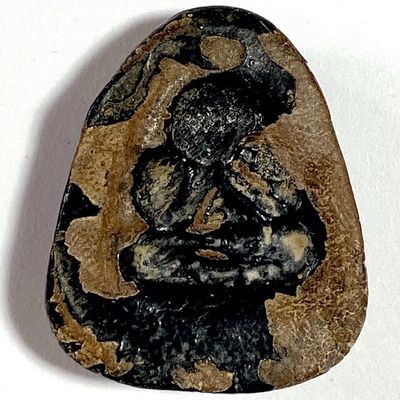
Because we guarantee delivery or money back/replacement, and Guarantee Authentic with real Blessings with all our amulets. Postage is Free Worldwide for all orders amounting to under 300 grams (60 grams for USA and Canada). We give Gifts with all orders large or small. Buying is Easy with our Secure Payment Gateway using Debit, Credit Card or Paypal, with customer protection built in by Paypal. Guaranteed Satisfaction with our 'You Can't Lose' policy, where we guarantee you that your item will be delivered, or if not, we replace or refund you. It is impossible to lose when you choose Us as your trusted supplier of Thai Buddhist Amulets and Occult Charms.
Good Service, only authentic amulets, and very Generous to customers, who always receive a nice gfift with every order! highly appreciated. Ajarn Spencer's knowledge induces great trust in the authenticity of the amulets in store

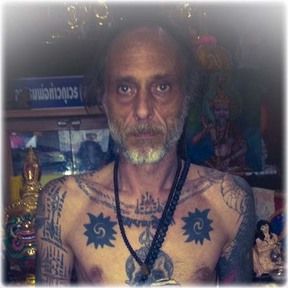
Ajarn Spencer
Author and Mystic
Ancient Amulet is Owned by Thai Buddhism and Occult Author, Ajarn Spencer Littlewood, who Guarantees Our Service with His Name. If there is one thing for which Ajarn Spenceris publicly known for, it is his Honesty, and his liking to Practice Generosity, which is one of the reasons Ancient Amulet has a rule that all customers receive minimum one free gift (amulet) of value with every order.
Online Only 24/7/365 Based in Krabi Thailand.
Krabi
24/7
Monday-Sunday
12:00 am - 12:am
